
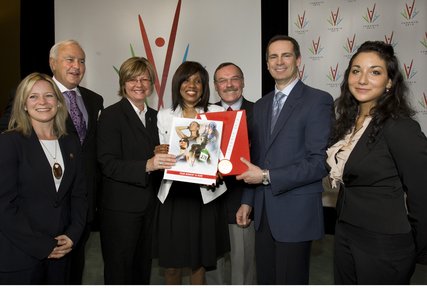
Now that Toronto has won its bid to host the Pan Am Games in 2015, it’s time for the city’s arts leaders to seize a rare opportunity. Athletics may be at its core, but this event can be about much more. It can be the occasion for a cultural explosion.
No one is more aware of this than David Peterson, the former Ontario premier who was chair of Toronto’s bid committee.
“The value of Pan Am is what you make it,” Peterson pronounced Tuesday in an interview about how a sporting event can be turned into a bonanza for culture. “Just having a few guys running around in a circle is not much use. We can get a lot more out of this in addition to the physical legacies of new pools and housing.”
The way Peterson perceives it, this is a way to celebrate the culture of the western hemisphere.
“I have a strong vision, and we have already engaged in discussions with some of our existing cultural institutions about the role they can play.”
At Peterson’s request, Luminato CEO Janice Price convened a round table of prominent arts insiders to brainstorm about creative ways to highlight Toronto’s cultural strengths in its bid presentation.
A particularly effective part of the presentation was a film called Share the Dream.
That film, by the ubiquitous arts marketing guru Barry Avrich, depicted athletes in three countries preparing for and dreaming of the 2015 games in Toronto.
Among the topics up for discussion at the round table were suggestions for what might be included in the opening and closing ceremonies.
“I am particularly pleased that culture was such an important part of the Toronto bid,” Price said Tuesday. “The opportunity to showcase our artists and cultural facilities can only strengthen the legacy the Pan Am Games will provide to Toronto.” However, we need to remember that during the two weeks in July that the Games are on, culture will play a secondary role to sporting events, except perhaps in the opening and closing ceremonies.
“During those two weeks it would be crazy for artists to compete with athletes for attention,” Peterson said. “Where the great opportunity for the arts comes in is in the year leading up to the Games. During that year we should be doing everything we can to celebrate the 42 countries in this hemisphere.”
That’s a perfect goal for Toronto, which leads the world in creating a lively multicultural urban centre.
Peterson made clear it would be a mistake to create a new bureaucracy for showcasing the arts in the year leading up to the Games.
“We already have a number of big, capable cultural institutions. They need to come up with imaginative events that tie in with the Games, focusing on the culture and history of the Americas and taking advantage of the chance to co-brand those events with the Pan Am Games.”
The Royal Ontario Museum, the Art Gallery of Ontario, various theatre companies, the Canadian Opera Company and the National Ballet of Canada are all potential partners, as long as they come up with projects that tie in with the Games and the culture of the western hemisphere.
Matthew Teitelbaum, chief executive officer of the AGO, is enthusiastic about such a partnership. “The Pan American Games is an extraordinary opportunity for the AGO and all cultural institutions to engage with diverse communities, bring people together, to inspire and be inspired by civic pride,” he said Tuesday.
And Caribana chair Joe Haltead is eager to link that event with the games in 2015.
“We will engage everyone with what they’re good at,” Peterson said. “We might call (Piers Handling, co-director of the Toronto International Film Festival) and say, `Piers, how can we work together?'”
But how would it all be coordinated?
“Luminato might be able to manage a lot of it,” Peterson said. “The festival could be extended.”
The CEO of the annual June arts festival is cautiously receptive. “We have experience in coordinating projects with various cultural organizations,” Price said, “and of course we want to help our arts partners make the most of this opportunity.”
Practically speaking, however, Games organizers must realize that the feasibility of these grand visions will depend on how much money can be allocated to develop extra cultural projects.
And if Games-related arts events are to roll out for an entire year leading up to July 2015, then Toronto’s Pan Am Games leadership will have to recruit a cultural commissioner with the powers of a wizard.
Let the search begin.
Take our FREE Online Assessment Today!
FREE ASSESSEMENT
Socialize with Abrams & Krochak
• AKCanada
• Facebook
• YouTube
• Twitter

Finally, Toronto is a winner, awarded the 2015 Pan Am Games on a first-ballot vote Friday.
The victory seems all the more sweet since the city and region have lost two Olympic bids, two Commonwealth Games bids in Hamilton and couldn’t even get a bid for the world expo off the ground.
“Our commitment, our pledge, our undertaking, our promise is to provide you with the best Pan Am Games ever,” Premier Dalton McGuinty told delegates assembled for the announcement.
“It’s an exciting time for so many of us here.”
Although Toronto’s bid backers arrived in Mexico this week both hopeful and optimistic, arguing the city had the best technical bid, organizers were reluctant to talk about a win – fearing it might jinx our chances.
Organizers took nothing for granted from offering Canadian treats like ice cream to voting delegates of the Pan American Sports Organization to running rehearsal after rehearsal for the final presentation.
And Toronto put on an upbeat, glitzy show that opened with athletes – gymnasts, volleyball players and a tennis player – bouncing into the hotel ballroom, followed by the 60-person strong delegation led by McGuinty.
Interspersed throughout the hour-long presentation were videos from athletes across the Western hemisphere emphasizing the benefits of Toronto including the world’s fastest man, Jamaica’s Usain Bolt, who was in town last summer.
The final video was a moving tale of what might be – youngsters from across the Americas and Caribbean – training and growing up to compete in Toronto in 2015.
Toronto’s presentation drew much applause – unlike Bogota’s and Lima’s which were more formal and featured wrap-up speeches from both their presidents – Colombia’s Alvaro Uribe and Peru’s Alan Garcia.
Politicians who spoke for Toronto’s bid – which is actually a southern Ontario bid stretching from St. Catharines to Oshawa to Barrie – included McGuinty, Mayor David Miller and federal sports minister Gary Lunn.
The $2.4 billion bid – which includes $1 billion for the athletes village in the West Donlands that will include a component of affordable housing after the games – include funding commitments from Ottawa, Queen’s Park and participating municipalities. Ontario is promising to cover any deficits.
The two-week games, held every four years, and open to athletes from across the Americas and the Caribbean, will bring badly needed sports infrastructure to the region.
Toronto will get a new aquatics centre with two 50-metre pools and a separate diving tank plus a high-performance sports training facility at the U of T’s Scarborough campus.
Hamilton is a big winner with a new track and field stadium that will be used by the Tiger-Cats and a new indoor velodrome.
But bid chair David Peterson always insisted the games were about much more than just sport.
Winning the games helps Toronto shed its “loser mentality,” but the games give governments a firm deadline to complete promised projects including transit improvements like the rail link to the Pearson airport.
Lima played the sentimental card – arguing that Peru had never hosted before, and Canada has already had the games twice before in Winnipeg in 1967 and 1999, so it was their turn. Some delegates reportedly said Lima’s organizers were pulling hard on the heart strings.
But in the end, it may have been problems with the 2011 games in Guadalajara that helped put Toronto over the edge. Construction has not even begun on some of the venues, especially the all-important athletes’ village, and organizers were ordered this week to put up a multi-million dollar performance bond to ensure work gets under way.
SOCIALIZE with Abrams & Krochak


Ontario students will start learning money smarts as early as Grade 4, when Queen’s Park rolls out a new financial literacy curriculum in September 2011.
Prompted by growing debt levels among Canadian youths and reckless personal spending habits that helped trigger the global credit crunch, the province will design lessons that can be worked into subjects up to Grade 12, said Education Minister Kathleen Wynne, who will announce the plan Monday in Toronto.
“The whole issue of how to manage money and risk is a really important concept – money and debt can become difficult issues in later life – but we can’t assume families will discuss these things at home,” said Wynne in an interview.
“But we’re not looking to create a new course; we want to build financial literacy into the existing curriculum.”
The government will create a working group to pinpoint the core concepts to be covered and will work with the non-profit Investor Education Fund to develop training for teachers.
Wynne said several provincial politicians supported the idea after Toronto school trustee Josh Matlow called last spring for a provincial curriculum in financial basics in the wake of the world economic crisis.
“When people feel out of control of their finances it can lead to deep depression, breakups of marriages,” Matlow says. As of January, student loan debt owed to the federal government surpassed $13 billion for the first time (the figure does not include provincial student loan debt). And according to a recent study by the Financial Consumer Agency of Canada, six in 10 Canadians between 18 and 29 are carrying some debt; more than a third of those owe $10,000 or more.
Once the curriculum is finalized, Matlow hopes it will teach students as early as Grade 4 about basics such as budgeting. Eventually he would like them to learn to read the fine print of cellphone and credit card contracts, the effects of a bad credit rating, mortgage financing and how marketers and advertisers target them.
Take our FREE Online Assessment Today!
Socialize with Abrams & Krochak
Minister Kenney Announces Appointment and Reappointments to the Immigration and Refugee Board of Can
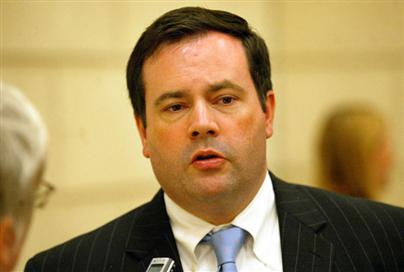
One appointment and three reappointments to the Immigration and Refugee Board of Canada (IRB) were announced today by Citizenship, Immigration and Multiculturalism Minister Jason Kenney.
“This government is committed to delivering on our promise to fill vacancies on the Board with qualified individuals as quickly as possible after vacancies arise,” said Minister Kenney.
Luella Gaultier was appointed for a three-year term in the Calgary regional office. Michelle Langelier and Marie-Claude Paquette were reappointed for five-year terms in the Montreal regional office. Kenneth MacLean was reappointed for a five-year term in the Toronto regional office.
These appointments were made in accordance with the IRB’s merit-based appointment process. Since October 2008, Minister Kenney has announced 52 appointments and 22 reappointments to the IRB.
Created in 1989, the IRB is an independent administrative tribunal that reports to Parliament through the Minister of Citizenship, Immigration and Multiculturalism. The Board has three divisions – the Refugee Protection Division, the Immigration Appeal Division and the Immigration Division. The IRB determines refugee protection claims made in Canada, hears immigration appeals, and conducts admissibility hearings and detention reviews.
For biographies on the IRB members, please see the backgrounder http://www.cic.gc.ca/english/department/media/backgrounders/2009/2009-10-27.asp
Take our FREE Online Assessment Today!
Socialize with Abrams & Krochak